

Paper’s playbook: Stephen Haney on building a design tool for the agent era
Stephen Haney on founder-market fit as a compass, hiring people into their dream job, and why now is the moment for designer founders.

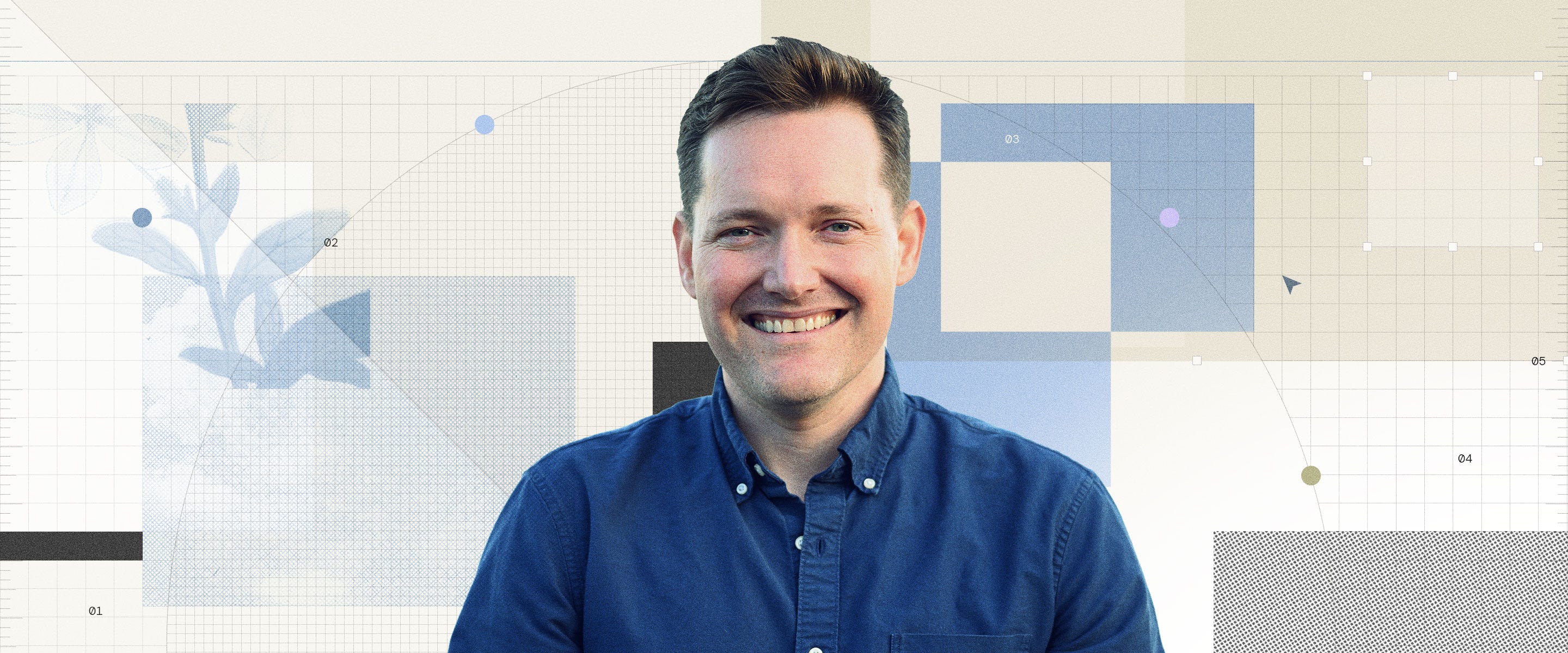
It’s hard to think of a new design tool that’s generated more buzz than Paper over the last few months. Every new feature launch seems to light up X, and designers are constantly sharing what they’re making with it. Less than a year after launching, Paper is already used daily by designers at a growing list of companies, including Ramp, Vercel, Resend, and Lovable.
As Paper announces its Series A, we spoke with founder and CEO Stephen Haney about the story behind the company and his vision driving it forward. For Stephen, passion, depth, and shared values aren’t soft virtues you prioritize once the business is working. They are the strategy. They shape how Paper chose its market, how it hires, how it grows without a sales team, and what it decides to build next.
What we cover in the interview:
The founder-market-fit bet that led Stephen to leave a good job with no validated idea
Why Paper waited on AI, then built a canvas agents can edit directly in HTML, without taking designers out of the driver’s seat
How Paper ships: single owners, six-week cycles, and “appetite” as the kill switch
What it means to “hire people into their dream job”
Why the best marketing doesn’t always look like marketing’
Are you a designer building something new, or know someone who is? We’re always looking for more designer founders to feature, invest in, or partner with. → Recommend a designer founder
Founder-market fit as a compass
Paper wasn’t Stephen’s first attempt to close the gap between design and code.
In 2018, he co-founded Modulz, a startup focused on designer-developer handoff. Along the way, the team built Radix UI, the unstyled component library that has since become foundational to modern web development. But while Radix found wide adoption, the business around it never quite felt like it was venture-scale. Stephen sold Modulz to WorkOS in 2022, where he spent the next two years leading product, helping the company grow and launching AuthKit.
As he started thinking about his next company, he kept coming back to the people he wanted to build for: “Whose problems do I want to solve? Who do I want to be on Zoom calls with, hearing about the issues they have in their day-to-day, and then trying to fix those? For me, that’s creative professionals.”
Stephen decided to leave WorkOS without a validated idea (something we typically wouldn’t recommend!). But what he did have was a strong sense of founder-market fit: the belief that you should build something you’d be happy working on for years, regardless of where it led.
“If you have great founder-market fit, your company won’t die, because you literally can’t. This is what I would do anyway.”
That mindset is especially important when things stop going well: “If you’re only thinking about your ARR, when it gets hard—and startups do get hard—you might give up, or pivot faster than you should. Doing something you truly love gives you a compass to live through the harder times.”
This time, he also chose to build alone, after years in co-founder setups and larger teams. “I love that there’s no alignment tax,” he says. “When you see something, you can just do it. You don’t need to talk to anyone.”
That’s how Paper began.
Building a design tool for the AI era
Paper is a design tool built around a simple idea: designers should work in the same medium that software is ultimately built in. Instead of creating static mockups that later get translated into code, designers work on a live HTML and CSS canvas that engineers and AI agents can edit directly.
That vision came from two early bets, both of which looked risky at the time.
The first was waiting to build AI. “You could raise a lot of money if you were an AI company,” Stephen says, “but we waited on AI because it wasn’t clear yet how it would help designers.”
That changed last December, when Stephen noticed designers doing something he hadn’t expected: prompting Claude Code from the terminal. “I was shocked. I didn’t think designers would be in the terminal prompting away in a CLI, but they were.” As we saw in our AI in Design 2026 report, nearly half of designers say they now ship production code.
It made sense in many ways. Getting directly in code lets designers build higher-fidelity interactive prototypes, experience product flows as they were created, and keep up with engineering teams that are shipping faster than ever. “The power of what it was giving you is just so great that you had to be there to get this power.”
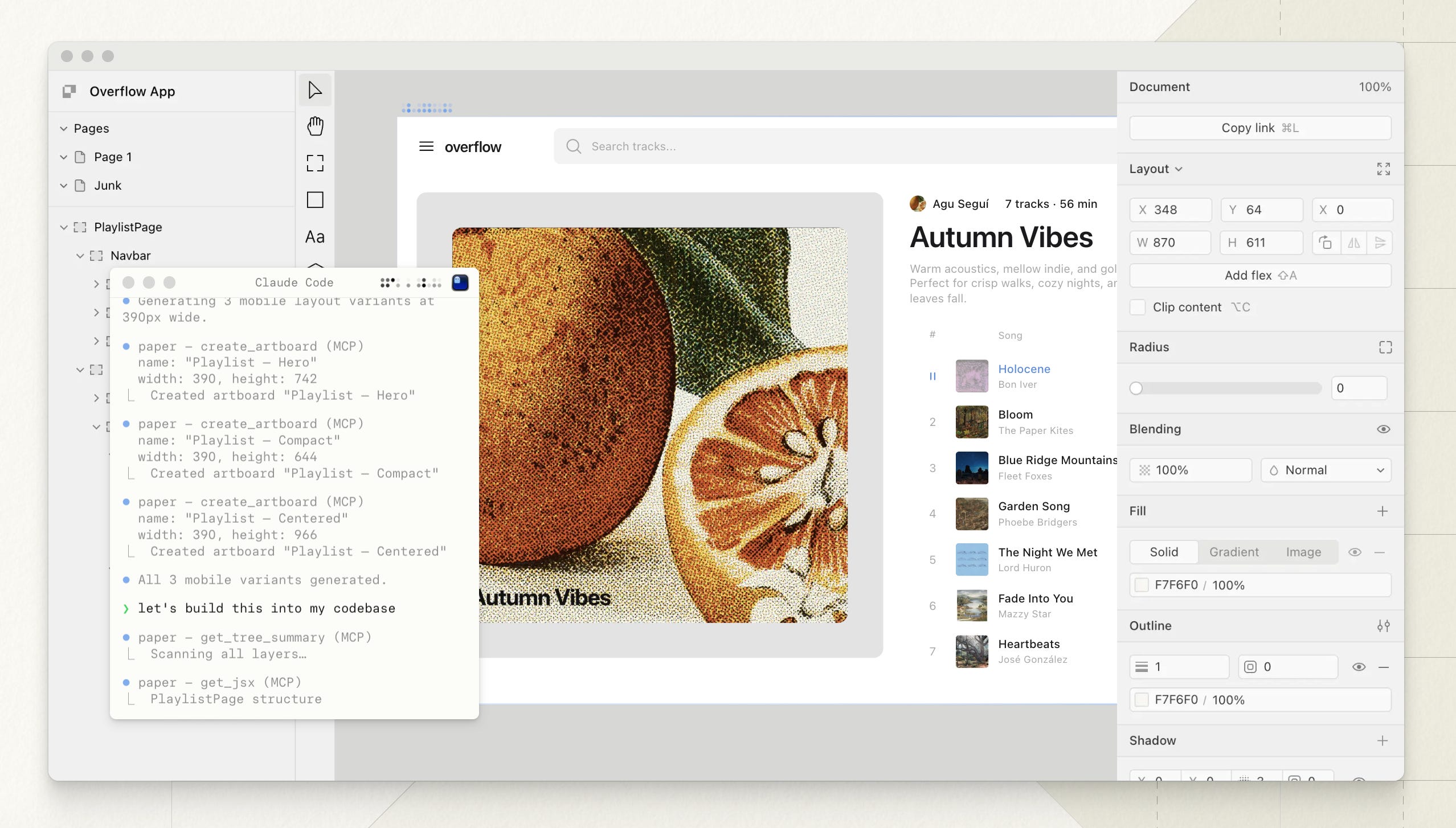
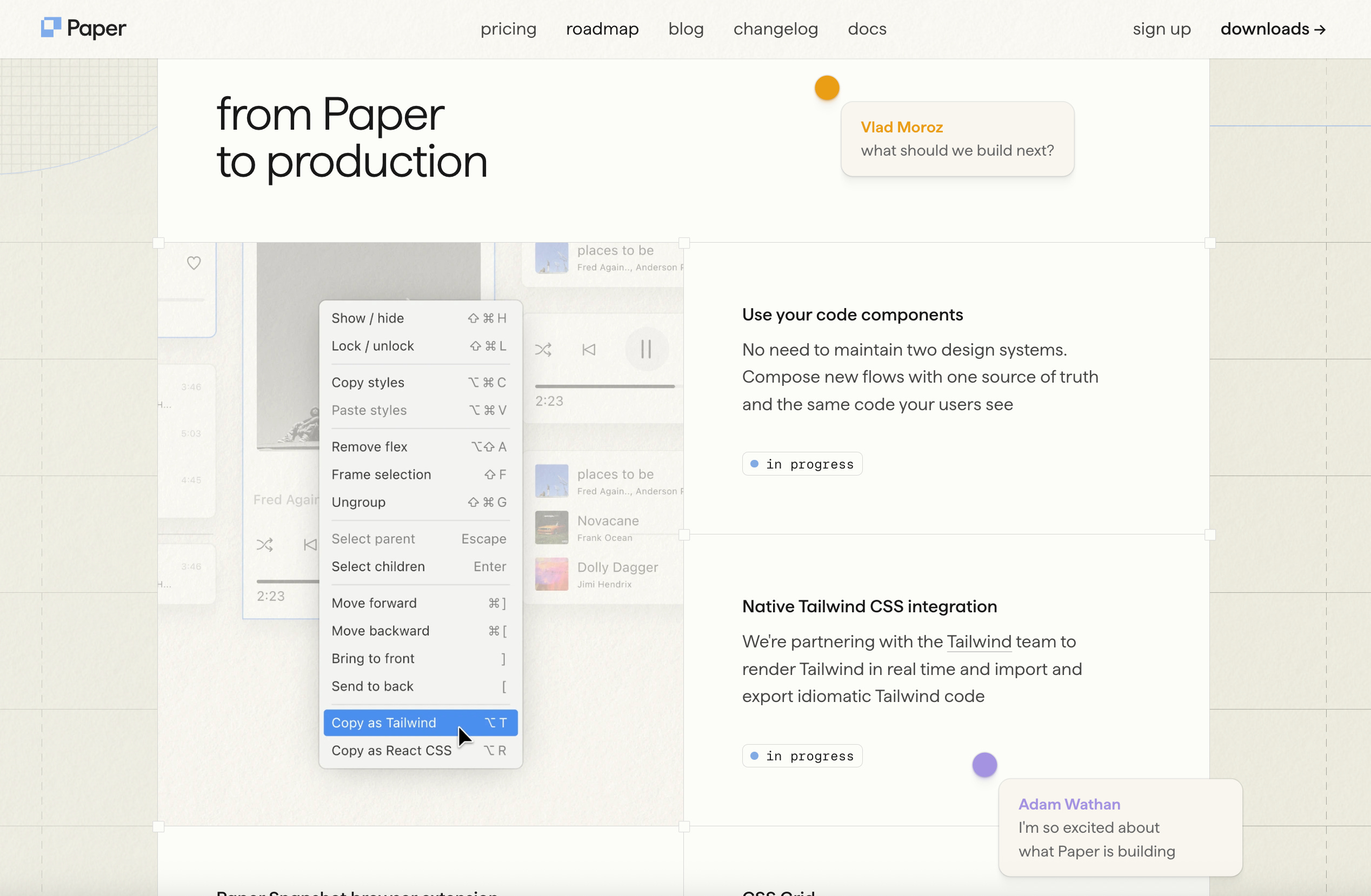
The second bet was technical. Paper renders directly in HTML and CSS instead of relying on a proprietary rendering engine like most design tools. That means AI agents work in a language they already understand, editing designs by generating HTML instead of translating between formats while keeping token costs low.
The goal is to automate the repetitive work around design, not design work itself. “The human designer figured out the design, but they need to ship it in eight different ways, and there’s a lot of boilerplate in that. Let’s save them eight hours.”
As AI makes it easier to create software, Stephen thinks great design becomes even more valuable, not less. “There’s so much stuff out there that design is how you elevate above it. You can’t have B-minus design and elevate yourself. You have to have A-plus design.”
How Paper operates
Paper’s operating system extends across product, people, and how the company shows up in the world.
Build products like you’re writing a great book
Stephen thinks building software should look more like writing than construction: “When you build a house, you can throw a hundred people at it. If quality doesn’t matter, build the house.” But that’s not the case for design software. “The best design tool has always won throughout history, and I think that’ll continue to be true. When you write a book, more authors doesn’t make a better book.”
What that means is that each product area has a single owner—somebody focused on the pen tool, another on design tokens. Put one person on vector editing for the better part of a year and you get the best possible version of it.
Projects take place in six-week cycles that act as checkpoints, instead of deadlines. During those check-ins, Stephen looks at what he calls “appetite”, the team’s current energy and conviction to keep investing in something: “If you don’t have appetite for something and someone keeps working on it, it’s going to get weird. They’re going to be posting updates, you’re not going to be excited about it.” When that happens, it’s better to ship what you already have and move on.
The final piece is focus under constraint. With a small team, every hour has to go toward the biggest bottleneck to growth. The team recently shipped an MCP server that unlocked AI adoption and expanded the top of the funnel. Now they’ve shifted their focus to more practical gaps, like design tokens and cursor presence, that enterprise teams want to see before they’re able to fully adopt the product.
Hire people into their dream jobs
“Something we think about when hiring is trying to find people’s dream jobs,” says Stephen. “What’s the most perfect job for you?” The payoff is twofold: “One, you’ll geek out on it. Two, you’ll have so much energy for it.” It’s the same philosophy that led him to start Paper in the first place: when you genuinely love the work, it takes far less effort to stay motivated and do it well.
He looks for obsession paired with range, instead of narrow specialization. “You have to be patient, you have to have a small team, and you have to be actively reaching out.”
As an example, Stephen first came across Alex Harri, the software engineer who would later build Paper’s pen tool and virtualize its layer tree for performance, through years of blog posts Alex had written about vector editing. Over the next six months, the two got to know each other, beginning with a simple message from Stephen: “I think we’re into similar things...do you want to talk about vector editing?”
Paper is hiring. If Stephen’s philosophy on craft, depth, and building for designers resonates with you, they’re currently hiring principal-level Product Designers and Design Engineers. The team is just 12 people (lots of room for impact!), fully remote, and looking for people who care as deeply about the craft as they do.
Pick the right investors
Stephen runs a similar filter on who’s on his cap table as he does with new hires. “You should be very comfortable texting with your investors. You want people who are values-aligned in your camp, because otherwise they’ll push you to do weird stuff you have to spend time explaining your way out of.”
In terms of pitching, his advice is to cut anything that isn’t true and strong. “People build a 30-page deck, 10% of the information is clearly wrong, the investor sees it, and the conversation is over. Say less. Our deck is almost nothing.”
Build fans by being one yourself
For their first real marketing push, the team went all out at Config—Figma’s annual conference in San Francisco—with 3,000 branded coffee cans, a dozen newsstands showcasing work from customers, 10 wrapped taxis, and two LED trucks circling Moscone Center. They even built custom claw machines, plus branded napkins and posters scattered at a Config after party. Everything, of course, was designed in Paper and built in-house.


Surprisingly, Paper doesn’t officially have a sales or marketing team, and Stephen half-jokes that he doesn’t fully understand why the marketing works. It does, though: the product has a devoted following, and his tweets routinely go viral.
His hunch is that it’s because the company is made of exactly the kind of people it builds for. “We’re all builders and designers and engineers, and almost everyone does both. That authenticity comes through.” When your values match the market’s, he says, “they’ll forgive missing table stakes if they believe in you.”
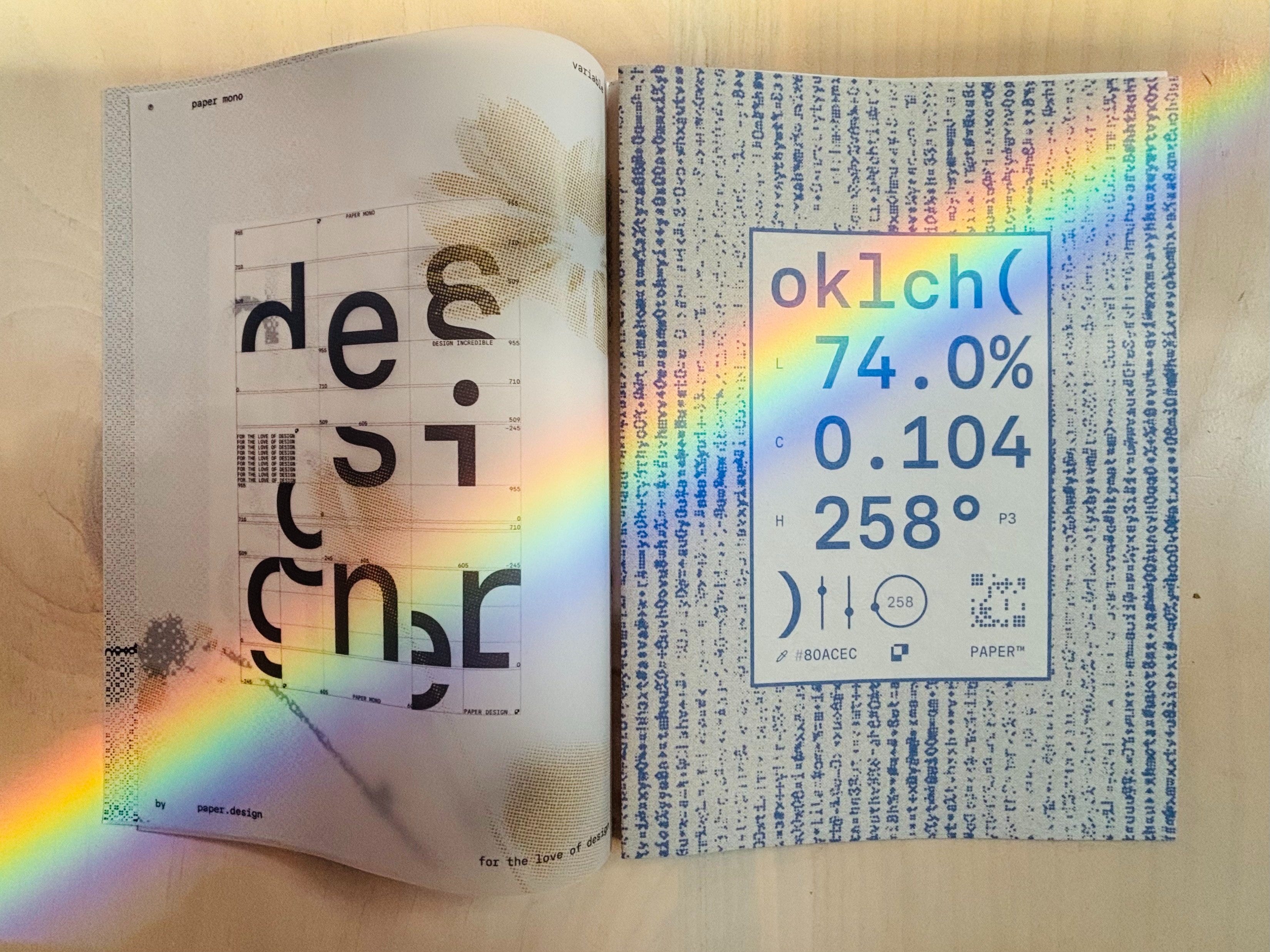
That belief is earned by care that shows up everywhere, not just in the product. Paper’s user education videos are produced in-house by Harcourt Allen. And it’s clearest where there’s no business case at all: Agu Seguí, the company’s founding brand designer, made an entire printed magazine exploring Paper Mono, the studio’s first typeface, and brought it to a team meetup. “I didn’t ask him to do this. There was no business outcome in mind. It was just, this is really fun, so let’s do it.”
Part of why so many designers have rallied behind Paper is that it’s abundantly transparent about what it stands for: “A professional designer might look at a design tool and ask, ‘is this tool for me, or is it trying to replace me?’ Paper is clear: we’re going to do everything in our power to support professional creatives.”
Key takeaways
Most of what Paper does traces back to the same instinct: build things you’d want to work on anyway, surround yourself with people who feel the same, and go deep enough that it shows in the work.
It’s why Stephen left a good job, why Paper renders in HTML, why one person can spend a year on a pen tool. It’s also why the marketing looks like designers handing out coffee at a competitor’s conference, or why someone prints a magazine just because they wanted to see it in print.
Founder-market fit is survival, not sentiment. Build the thing you’d do anyway. It’s the compass that keeps you from quitting or pivoting badly when the work gets hard.
Speak your medium’s native language. Paper renders in HTML/CSS, so agents can edit it directly at a fraction of the token cost. Fewer translation layers is a durable advantage.
Depth wins where quality is the product. More authors don’t make a better book. In craft markets, one person going deep beats a crowd going fast.
Hire for the dream job. Write the role for the person whose life’s work matches it, and be patient enough to wait for them.
Values are distribution. If you belong to the community you serve, authenticity does the marketing a sales team otherwise would.
A book that shaped Stephen’s thinking: Hackers & Painters by Paul Graham. While Paper isn’t a YC company, a lot of early Paul Graham and YC writing shapes how Stephen builds. “They’ve figured out how startups work. You take the parts that work for you and leave the rest.”
Where to find Stephen
Paper: paper.design
Hero illustration by Adam Dixon